Cann, A. (2026) The Softly Singing Spider. British Arachnological Society Newsletter, 166, 9.

click for larger image
Cann, A. (2026) The Softly Singing Spider. British Arachnological Society Newsletter, 166, 9.
I spotted some strange Hymenopteran goings on on the side of a flower pot on my patio. On investigating, I found this female Common Black Spider Wasp, Anoplius nigerrimus, trying to fly with a large female Common Fox Spider, Alopecosa pulverulenta, considerably heavier than herself up under the rim of the pot.

The excellent BWARS account for this species makes clear that they aren't too fussy about nesting spots. I interrupted her for a quick portrait, then put her back by the pot with the babyfood (which was done for, having already been paralysed).


The British Arachnological Society recording schemes atlas has had a long awaited revamp and is now available, with 1.6 million UK Spider, Harvestmen and Pseudoscorpion records to play with. The new atlas is fantastic, with many ways to slice and dice the data. It's taken a huge amount of work to get to this and the team behind it are to be congratulated. It would be fantastic if all recording schemes could make their data available like this.
A new paper shows that Steatoda nobilis and Zygiella x-notata typically made up more than 80% of the urban spiders in an Irish survey.
Collier, B. L., Leonard, D., Lyons, K., Dunbar, J. P., Lawton, C., & Dugon, M. M. (2026). Survey of Synanthropic Spiders in Ireland Reveals Expansion and Dominance of the Invasive Noble False Widow Steatoda nobilis in Urban Habitats (Araneae: Theridiidae). Ecology and Evolution, 16(3), e73193.
https://doi.org/10.1002/ece3.73193


A cold December day, half the countryside under water - what else to do but huddle over a nice warm microscope catching up with samples from the summer bulge when it is just impossible to keep up. In this case, a streamside vacuum sample from September. It started off in a humdrum way, knee deep in Bathyphantes gracilis and Tenuiphantes tenuis, but then ... a tiny speck of a spider turned out to be the Ray Spider, Theridiosoma gemmosum. I've never seen this species before and it's the first record for VC55 as well as a considerable range expansion. Fortunately it's a pretty unmistakable species (once you look close enough), which is lucky as this was an immature male - not surprising since September is past the peak for this species. A nice surprise on a winter's afternoon.
A month of variable weather and troublesome Hymenoptera...
VC55 Terrestrial Heteroptera Recording and Checklist

After a great deal of work - mostly by my colleagues with a shamingly small contribution from me - we were finally able to publish the first two parts of our documentation of VC55 Bug Recording:
LESOPS 63: VC55 Terrestrial Heteroptera VC55 Terrestrial Heteroptera Part 1: Recorders and Recording. Sue Timms, Kate Nightingale & Alan Cann. Leicestershire & Rutland Entomological Society Occasional Publications Series 63, October 2024. ISSN 095–1019. Available at: https://www.naturespot.org.uk/sites/default/files/2024-10/LESOPS63TerrestrialHeteroptera.pdf
LESOPS 64: VC55 Terrestrial Heteroptera Part 2: Provisional Checklist. Sue Timms, Kate Nightingale & Alan Cann. Leicestershire & Rutland Entomological Society Occasional Publications Series 64, October 2024. ISSN 095–1019 Available at: https://www.naturespot.org.uk/sites/default/files/2024-10/LESOPS64TerrestrialHeteropteraChecklist.pdf
The plan is for more to follow in future, covering the other major groups.
03.x.2024
Worked on a range of Lygus specimens. I finally feel confident about these tricky bugs (as long as I can find a male!).
04.x.2024
After the rain of the past week it was good to spend a day out at Melton Country Park. I was surprised to realise that I hadn't actually been there for nine years. I found a very good range of insects the highlights of which were Micronecta scholtzi, lots of Anthocoris limbatus and my favourite ladybird, Hippodamia variegata, the Adonis Ladybird.

05.x.2024
A friend dropped some specimens off for me to identify. The highlight was a male Anyphena numida. This is the first record of this spider for Leicestershire and Rutland. It was first identified in the UK in 2017 and is spreading rapidly from the southeast.

10.x.2024
After much prevarication I finally cleaned the sensors on the microscope cameras. I don't like doing this because of the risk of damage but it seems to have worked well - far fewer annoying spots in the images now.
11.x.2024
Quite a good frost, giving me hope for good autumn colour in the days to come took a trip to Cossington Meadows mostly targeting the pools with the dipnet. This produced some good records, including Corixia dentipes.
13.x.2024
Lots of fungi around but I'm very rusty on my ID skills. I'm aware that AI identification divides opinion, but it you think it's going to go away, you've lost the plot. The latest AI incarnation I've become aware of is the beta version of automated picture recognition on the Danish Fungal Atlas website. Seems pretty good to me, with the obvious limitations - https://ajcarthropoda.blogspot.com/2024/10/more-on-unstoppable-rise-of-ai.html
15.x.2024
Took a trip down to Blaby and Countesthorpe. Pond dipping produced a good range of species.
17.x.2024
Enjoyed a very good LRES meeting at which Ray Morris discussed gall midges, even though galls and Diptera are not my area! Good to have face to face discussions.
18.x.2024
After a misty start, took a trip to Shady Lane Arboretum on a sunny but windy afternoon before Storm Ashley hits over the weekend.
21.x.2024
Visited a private estate at Osbaston to do some recording. In the walled garden we found the best growth of Mistletoe that I have ever seen on one of the old apple trees. Even better was the fact that it was only a few feet off the ground. Gently beating this produced a possible single specimen of Anthocoris visci, a Mistletoe-dependent species I have been looking for for two years. Unfortunately this turned out to be a female so we have been unable to confirm the species by dissection. However, a nearby Box hedge also produced Anthocoris butleri, also a good record. Unfortunately I didn't spot a wasp nest I was standing next to (while trying not to fall in a stream) and managed to get stung on the hand by a wasp, but carried on recording after making a very swift exit, pursued by wasps.
22.x.2024
Very pleased to have a flying visit from Jon Daws, dropping off some old record material.
The hand which was stung by the wasp yesterday is now very swollen and painful making it difficult to do anything. I'm becoming increasingly annoyed that I didn't identify the wasp that stung me so that I could record it, and I regard an arm covered in very angry wasps as a rather poor excuse (even though running away as fast as possible was the smart thing to do under the circumstances).
27.x.2024
Took Jon Daw's tuning fork (in D) to the Botanical Gardens to bother a few spiders in their webs. Moderately successful although there doesn't seem to be that much around at present.
30.x.2024
A return visit to Osbaston to try to confirm the Anthocoris visci record from a week ago. Sadly we were unsuccessful.


On 26th January 2022 I was refurbishing a pond in my Leicester garden when I found a single female spider which, after investigation, turned out to be Megalepthyphantes sp. near collinus. Quite a mouthful that (because it still lacks a formal description and naming), so Megalegs for short. This record was a big range expansion for this new spider. And ... that was it. I have not found any more specimens, and neither has anyone else in VC55. Until, that is, Saturday 9th March 2024, when, opening my dustbin I found another female on the inside of the lid. To find one spider may be regarded as fortunate; to find two looks like there is a colony in my garden. The bin was crammed with hedge prunings from the previous day, which is where the spider must have come from. I look forward to future sightings.


This paper looks at the origins and spread of Steatoda nobilis, some dodgy arachnology from the Revd. Octavius Pickard-Cambridge, and concludes that the reason for its rapid range expansion is ... unknown (but it's not climate change).
Steatoda nobilis, a false widow on the rise: a synthesis of past and current distribution trends. (2019) NeoBiota, (42). https://doi.org/10.3897/neobiota.42.31582
Abstract:
The Noble False Widow, Steatoda nobilis (Thorell, 1875) (Araneae, Theridiidae), is, due to its relatively large size and potential medical importance, one of the most notable invasive spider species worldwide. Probably originating from the Canary Islands and Madeira, the species is well established in Western Europe and large parts of the Mediterranean area and has spread recently into California and South America, while Central European populations were not known until 2011.
We report on long-time observations that reveal that at least two flourishing populations in Germany (Cologne) have been present for over five years, while in Ecuador one population has been observed between 2014 and 2018 and several other records were made in other parts of the country. Data obtained from the British Spider Recording Scheme demonstrate that the species moved significantly northwards since the report of the first populations in the very South of England, after several decades of relative stasis. The sudden northward expansion highly correlates with a massive rise in press coverage of the species.
In the Americas, S. nobilis is currently known from four countries (USA, Chile, Ecuador, Colombia), and available DNA barcoding data obtained for specimens from this area suggest that multiple introductions occurred within each country. Using ecological niche modeling, we identified suitable climate regions for the species and discuss possible reasons for its current spread. We propose that seaside cities and villages with a temperate oceanic or Mediterranean climate are especially favourable potential habitats for S. nobilis and will face the highest colonization pressure in the future, while tropical upland regions with temperate climates are also vulnerable to invasion by S. nobilis.
High-strength and ultra-tough whole spider silk fibers spun from transgenic silkworms. Matter: 6, 10, P3661-3683, (2023).
Summary: "To advance ecological civilization, developing sustainable, eco-friendly high-strength and ultra-tough alternatives to non-sustainable synthetic fibers, such as nylon, is crucial. This necessitates a deeply scientific understanding of the fundamental determinants of fiber strength and toughness, as well as overcoming engineering challenges for cost-effective, large-scale production of high-performance silk fibers. Inspired by the mechanical properties of polyamide fibers, including nylon and Kevlar, we employed CRISPR-Cas9-mediated gene editing to successfully synthesize whole polyamide spider silk fibers from transgenic silkworms. These fibers exhibited impressive tensile strength (1,299 MPa) and toughness (319 MJ/m3), surpassing Kevlar’s toughness 6-fold. Thus, they offer promising potential as sustainable alternatives to synthetic commercial fibers. Furthermore, our research provides valuable insights into the fundamental essence of fiber toughness and tensile strength, challenging the conventional notion that these properties are contradictory. These findings have significant implications for guiding the production of synthetic commercial fibers that simultaneously possess high strength and ultra-toughness."
https://doi.org/10.1016/j.matt.2023.08.013
Arthropod decline at the local (field) scale is largely influenced by changes at the landscape scale.
"There is widespread evidence for a worldwide trend of insect decline, but we have much fewer data about recent temporal trends in other arthropod groups, including spiders. Spiders can be hypothesised to similarly decline because of trophic dependence on insects and being equally sensitive to local and global environmental changes. Background trends in arthropod populations can be verified if we decouple large-scale environmental transitions, such as climate change, from local factors. To provide a case study on baseline spider community trends, we observed changes in the spider community of an unsprayed alfalfa field and its margin 23 years apart under largely unchanged local conditions. We aimed to determine whether there are changes in spider abundance, species richness and mean species characteristics. Spider abundance per unit effort decreased dramatically, by 45% in alfalfa and by 59% in the margin, but species richness and most characteristics remained unchanged. Community composition in both habitats shifted and became more similar by the current study period. The population decline was especially marked in certain farmland species. We propose that in the absence of local causative factors, spider abundance decline in our study indicates a reduction of spider populations at landscape and regional scales."
Samu, F., Szita, É., Botos, E. et al. Agricultural spider decline: long-term trends under constant management conditions. Sci Rep 13, 2305 (2023) https://doi.org/10.1038/s41598-023-29003-2
This is why nature reserves don't work: Cooke, R., Mancini, F., Boyd, R. J., Evans, K. L., Shaw, A., Webb, T. J., & Isaac, N. J. (2023). Protected areas support more species than unprotected areas in Great Britain, but lose them equally rapidly. Biological Conservation, 278, 109884: https://doi.org/10.1016/j.biocon.2022.109884
I would sum up 2022 as quality over quantity...

I haven't been able to spend as much time as I would have liked on spidering this year, but I'm still pretty pleased with the outcome. The weather has been challenging with alternating exceptional droughts, rainfall and the highest temperature ever recorded here. Although the number of specimens I recorded was well down, I managed to make some nice finds. Here are my highlights.
Megalepthyphantes sp. near collinus
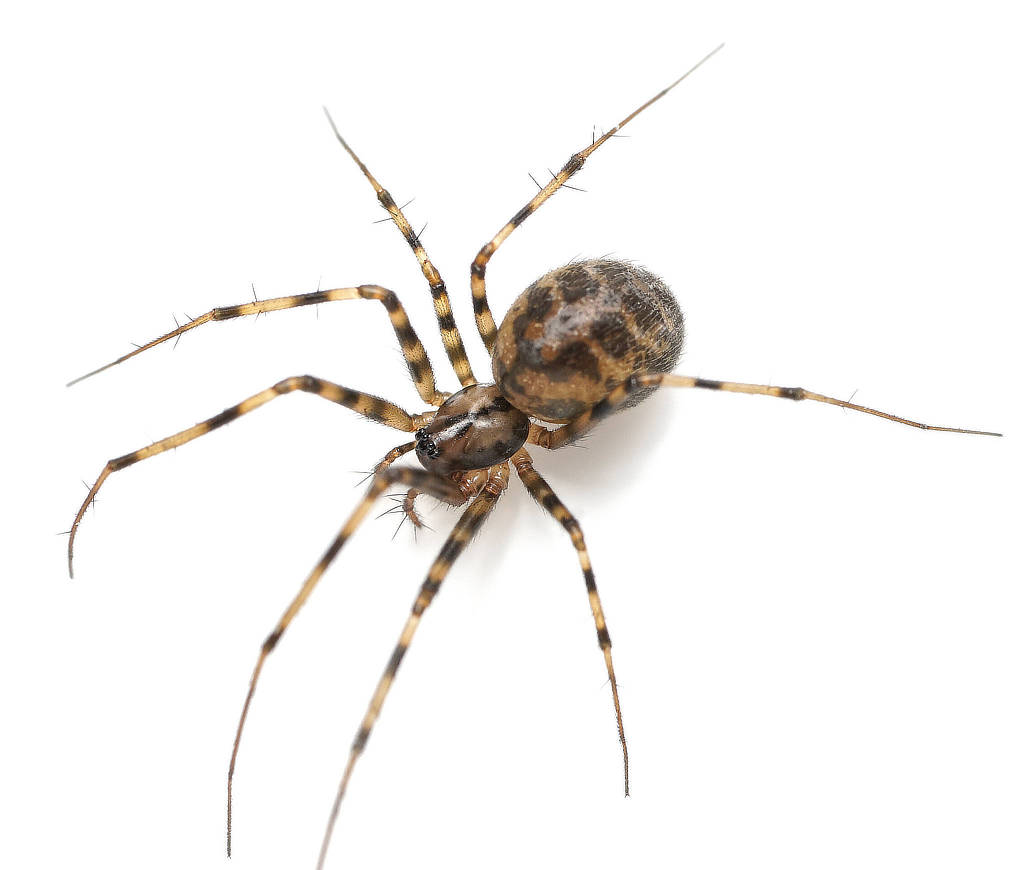
Leptorhoptrum robustum

Mastigusa macrophthalma

Textrix denticulata

Mangora acalypha

This orb-weaver has only spread to VC55 very recently and the few records have been from a garden so it was a pleasant surprise to find it on Gorse in a rural location. This one is clearly on the move.
Arctosa leopardus

Collinsia distincta

This Linyphiid came from the same riverside sample as Arctosa leopardus, making this a productive trip. The first record for VC55 for this species.
Lophomma punctatum

Oonops domesticus

Quiz time! Which species of spider is this the natural habitat of?


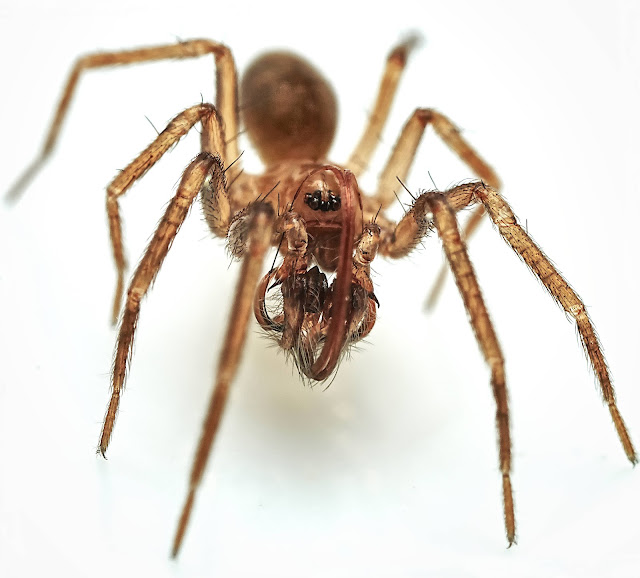
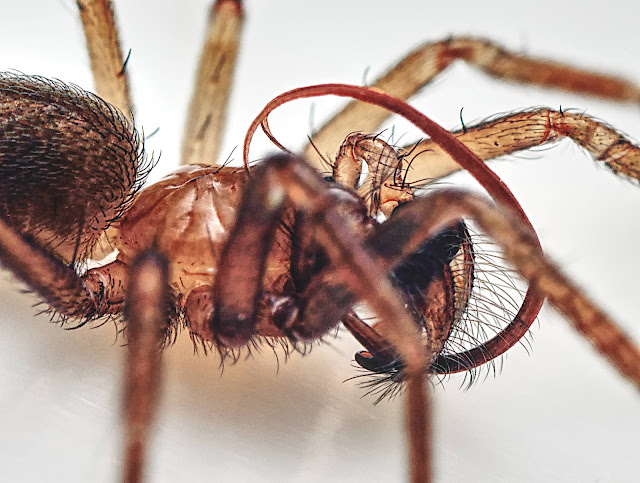
Success :-)
The other interesting thing about this record is that the spider was associating with Formica lemani (thanks to Gavin Gamble and Matt Hamer for the ID) under the rock, which I have not seen listed as a known associate for this species elsewhere:
