Tuesday, 15 March 2022

Microscope Upgrade

My former stereo microscope (a GXM XTL3T101) has been my workhorse ever since I bought it. This is a mid-priced instrument and excellent value for money. One thing I have been finding however is that a high magnifications (40-45X) the quality of images dropped off compared with lower magnification. I have recently been able to trade-in my former microscope and upgrade to a GXM UltraZoom-3 stereo microscope: 


So what do I think of it? Well to be honest my initial hope was to do a bigger upgrade than this, but without paying Leica/Nikon/Olympus/Zeiss silly money. That proved to be difficult as I couldn't find anything suitable in the mid-priced - Russian oligarch price gap. The GXM UltraZoom-4 is a great instrument and closer to what I was hoping for, but sadly the working distance is too short, so I settled for the UltraZoom-3. 

After having a few days to use it, the GXM UltraZoom-3 is clearly an optical upgrade from the GXM XTL3T101, but perhaps not as mind-blowing as I was hoping for. Where it does score a big win is in the upper end of the magnification range (63x vs 45X on the XTL3T101). No only is the resolution better, but it is much brighter at the top end. This is particularly true of the trinocular light path to the camera, and I'm now able to use lower ISO settings and shorter exposures than before. The increased magnification also comes in handy - here's an illustration. A recent sample turned up the usual Tomocerid springtails. However, for the first time I was able to visualize the spines on the dens and identify the specimens as Tomocerus vulgaris without having to resort to using my compound microscope: 

Tomocerus vulgaris dens

That is an advantage over the GXM XTL3T101 and makes me feel I made the right decision with the upgrade.


Monday, 7 February 2022

Spider names - what do they mean?

Most spiders do not have common English names. I find it easier to remember the latin species name if I know what it means. 


Bathy - "deep"

Bathyphantes - Deep Weaver

Bathyphantes approximatus - "close to" - Similar Deep Weaver

Bathyphantes gracilis - Slender Deep Weaver

Bathyphantes parvulus - Small Deep Weaver

Bathyphantes setiger - Setiger's Deep Weaver


Leptos - "thin"

Lepthyphantes - Thin Weaver

Lepthyphantes leprosus - Skinny Thin Weaver

Lepthyphantes major - Greater Thin Weaver


Megalepthyphantes - Giant Thin Weaver

Megalepthyphantes collinus - Collin's Giant Thin Weaver

Megalepthyphantes nebulosus - Misty Giant Thin Weaver


Phantes - Greek, "weaver"


Segestria florentina - blanket or counterpane, a reference to the shape of its web outside the burrow, from Florence - Florence Blanket Spider.


Tenuis - "thin/slender"

Tenuiphantes - Slender Weaver

Tenuiphantes alacris - Brisk/Quick Slender Weaver

Tenuiphantes cristatus - Created Slender Weaver

Tenuiphantes flavipes - Yellow-footed Slender Weaver

Tenuiphantes nigrinus - Black Slender Weaver

Tenuiphantes zimmermanni - Zimmermann's Slender Weaver, after Walter Max Zimmermann (1892–1980)


Monday, 22 November 2021

BLUE+DECKER


After 22 months my trusty BLACK+DECKER GWC3600L20-GB eVac died. In the field on Friday, flicked the switch - nothing. Lots of fiddling, nothing. Completely dead. A completely dead lump of orange and black plastic electrical waste. I estimate I used it somewhere between 50-100 times, was careful always to dry it as fully as I could before putting it away. Is 22 months a reasonable lifespan? To be fair, B+D do have a 24 month warranty, but since I don't have all the original bits I don't think that would apply. Either way, it has turned up close to a dozen VC55 firsts, beasties I would never have found otherwise. After the woe, I ordered another one. At least I have some spares now, I just wish it was repairable.

Friday, 5 February 2021

The Spiders of Leicestershire - Local Online Talk

Thanks to Leicestershire and Rutland Wildlife Trust Charnwood Local Group for hosting.


Tuesday, 19 January 2021

2020 - A Twist in the Tale


Gongylidium rufipes

2020 - well that was unexpected. The neverending Leicester lockdown would be expected to put a big dent in my biological recording. In fact, it's a little more complex than that. Garden moth trapping was a big bust - frankly, I didn't put the hours in, which is odd considering how much time I spent at home, but the County Recorder, who traps nearly every night, also reported his worse year since 2012, so something else was going on - the weather, which frankly, did a lot more damage to recording than lockdown. Although I made fewer trips and drove less miles than in previous years, I recorded 116 species of spider (all in VC55) in 2020, compared with 103 species in 2019. The explanation for that is my noisy orange friend, which I bought in January 2020 before Covid hove into view. Fewer trips, less miles, more species. Hurrah! 


Wednesday, 2 December 2020

The demise(?) of the local natural history society

I was sad to hear of the demise of Hinckley Natural History Society. In my opinion, it is unlikely to be the last. From reports I am hearing, most if not all local societies are struggling with static or falling membership and an ageing demographic. It would be easy - and wrong - to blame lots of things for this. As on the high street, Covid-19 may have provoked an immediate crisis, but in reality it has only accelerated trends which have been in place for some time. It would be even easier to blame "the Internet", but equally wrong, as anyone who has read Robert D. Putnam's 20 year old book Bowling Alone: The Collapse and Revival of American Community can testify. The colonisation of natural history by mass media has not helped. Millions are happy to sit on their sofas and watch the antics of cuddly wildlife on Springwatch, but few are prepared to get off them and drive to a chilly church hall on a February evening, or put their hands in their pockets to pay the annual subscriptions needed to fend off the costs of insurance and venue rental. If you're one of the stalwart band of officer holders of a Natural History Society, the tide of history was against you. The decline of social capital has been linked to the rise of political populism - an interesting theory, if impossible to prove. 

At this point, I should pull the rabbit-shaped solution out of a top hat. Except that I don't have one. Amalgamation into ever larger umbrella bodies (South Leicestershire Natural History Society ... Leicestershire and Rutland Natural History Society ... East Midlands Natural History Society ...) cannot replace the involvement and engagement of local community. Virtualisation via websites, Facebook groups and Twitter accounts is a partial reprieve but not a substitute for what is being lost - we are told we are in an epidemic of loneliness. I wish I had an answer. The thing I am certain of is that the solution has to be innovative and engage a different demographic than "the way we've always done it" was able to, the Victorian/Edwardian model of monthly meetings in public halls. The solution will be divisive  but to succeed, more people have to like it than were engaged with the previous model. 

If they are not close enough to a major population centre to support their dwindling demographic, societies have two options - either abandon the concept of locality and go global (push the envelope, conduct original research, engage with national and international experts), or try to change their demographic appeal to stay local. Before there were scientific journals, business was conducted via learned correspondence between scientists. What about starting an email list or a WhatsApp group (and sticking with it over the long haul until it gains traction)? Before there were natural history societies conversations happened in coffee houses. How about about a regular date in a local Costa or Cafe Nero? Drop in Wednesdays? If people don't want to come to evening talks after a long day at work, what is it that they like about Springwatch? Organize a wildlife quiz in the local pub or nature-oriented walks? None of these may work and they all take effort, but the alternative is not palatable. 


Miskell, L. (2016) Meeting places: scientific congresses and urban identity in Victorian Britain. Routledge:
"The promotion of knowledge was a major preoccupation of the Victorian era and, beginning in 1831 with the establishment of the British Association for the Advancement of Science, a number of national bodies were founded which used annual, week-long meetings held each year in a different town or city as their main tool of knowledge dissemination. Historians have long recognised the power of 'cultural capital' in the competitive climate of the mid-Victorian years, as towns raced to equip themselves with libraries, newspapers, 'Lit. and Phil.' societies and reading rooms, but the staging of the great annual knowledge festivals of the period have not previously been considered in this context. The four national associations studied are the British Association for the Advancement of Science (BAAS), the National Association for the Promotion of Social Science (NAPSS), the Royal Archaeological Institute (RAI) and the Royal Agricultural Society of England (RASE), who held annual meetings in 62 different provincial towns and cities from 1831 to 1884. In this book it is contended that these meetings were as important as royal visits and major civic ceremonies in providing towns with an opportunity to promote their own status and identity. By deploying a wealth of primary source material, much of which has not been previously utilised by urban historians, this book offers a new and genuinely Britain-wide perspective on a period when comparison and competition with neighbouring places was a constant preoccupation of town leaders."


Sunday, 29 November 2020

Mocydiopsis attenuata - persistence pays off

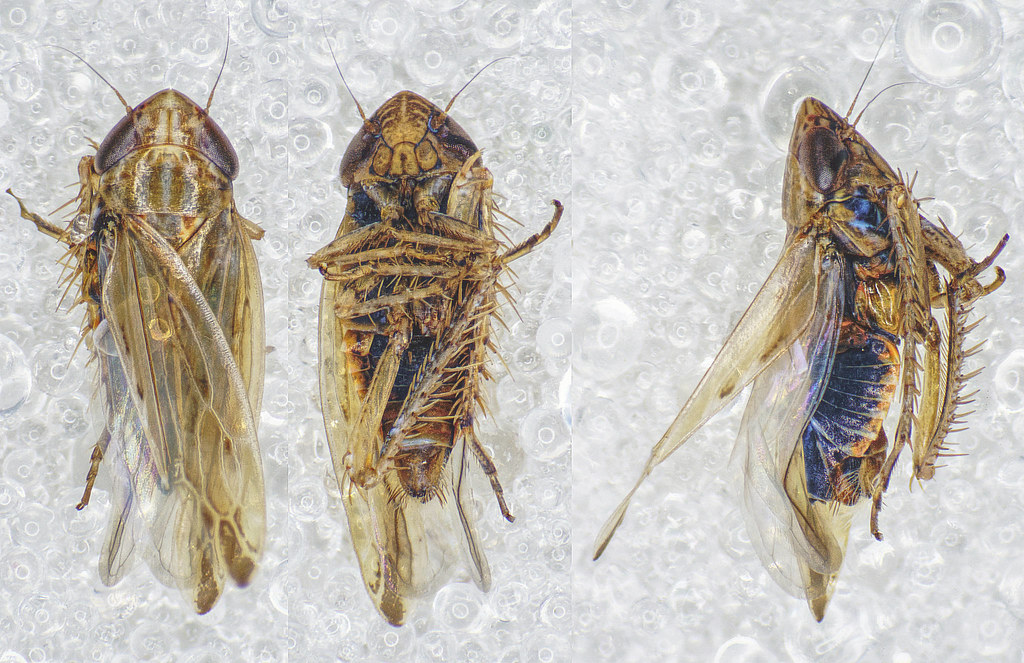
Mocydiopsis attenuata

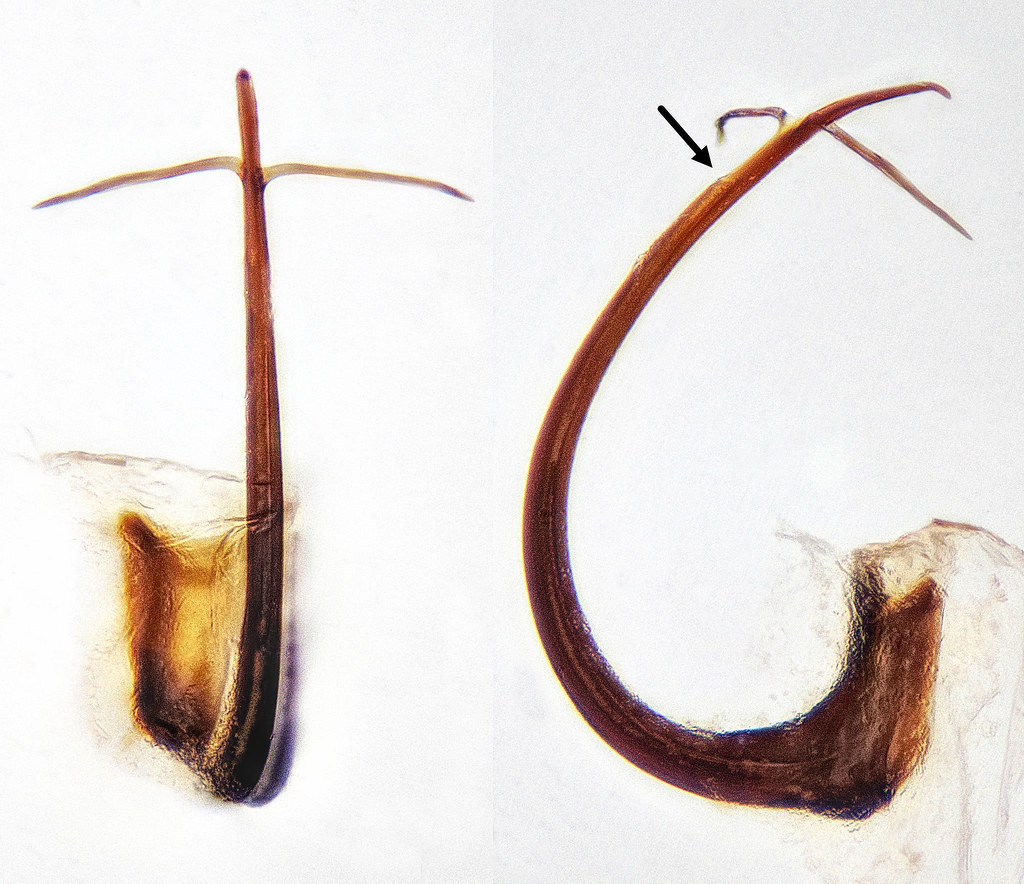
I've come across Mocydiopsis attenuata several times before. At least, I think I have, but all the previous specimens have been female.  Although there are only three UK species of Mocydiopsis they are not easy to identify, and the females really can't be safely identified to species level. And there's the problem. In amongst more than a dozen females in a recent sample I finally found a male. From then on it was easy due to the characteristic aedeagus: 

Mocydiopsis attenuata aedeagus

There is one previous VC55 record for Mocydiopsis attenuata in the ORCA database, but it's a bit tenuous  with a range of dates and only a four figure grid reference. Without being able to see the original material I have no idea how reliable it is (verification level "Presumed Correct"), but given my previous experience... So how rare is Mocydiopsis attenuata? Well the females are not uncommon - but that's the problem. The males are rare as hen's teeth.