Monday, 22 January 2024

A simple (and cheap) macro diffuser for Olympus TG cameras

Photography - it's all about the lighting (the clue is in the name). 

Olympus TG cameras are great for macro photography. Working at very close range can be difficult, often blocking the light needed to illuminate the subject. The Olympus TG Light Guide is a very helpful (if over-priced) accessory which directs light from the front LED in a circular ring light-fashion onto the subject. This is useful but can be a problem when taking macro photos of shiny subjects. The clear plastic at the front of the TG Light Guide does not provide much in the way of diffusion, causing a bright ring-shaped hot spot on images:

Ladybird

The diffuser consists of a white plastic pudding cup. I bought mine online but you could probably find something which would do the job in the dessert section of the supermarket (note: eat pudding before use).  Turn the cup upside down and place the Light Guide on the top of the cup, draw around the inside of the lens hole in the Light Guide and cut out a hole (you can do it less crudely than I did, but mine still works fine). 

Diffuser

To use, place the subject under the cup, put the camera (with the Light Guide) on top, compose and take your photos. The remaining rim of the cup covers the clear ring of the Light Guide and diffuses the LED further, reducing hot spots on the subject. The cup also acts as a copy stand which reduces camera movement when using the focus stacking functions of the camera. 

Diffuser

It's cheap, it works, and you get to eat pudding. What's not to like?


Sunday, 31 December 2023

Entomology Journal - December 2023

December was an entomologically-challenging month with exceptionally wet and windy (but mild) weather which limited what I was able to achieve. Here are some points of note.

Chris Raper
I recently chanced across Chris Raper's website (http://chrisraper.org.uk/blog/) where he writes about his varied personal interests, but some of the content overlaps with his professional role at the Natural History Museum. I was particularly interested by his recent article on whether duplicates are a problem in biological recording. His answer is "it's not a problem at all – having more data is always better than less and duplicates are inherent to all biological data", but please read the article for yourself - http://chrisraper.org.uk/blog/biological-recording-dispelling-the-myths/
Also worth reading is his eloquet explanation of "Why we collect insects" - http://chrisraper.org.uk/blog/entomology/maintaining-an-insect-collection/

Common insects are suffering the biggest losses
My intention here is to try to focus on uplifting content, but some bad news is unavoidable. A recent research paper suggests that terrestrial insect decline is being driven by losses among more common species - the species with the most individuals (the highest abundance) are disproportionately decreasing in number. Examples include the Common Froghopoper, Philaenus spumarius. This counters the common narrative about biodiversity loss which focuses on declines of rare species: Disproportionate declines of formerly abundant species underlie insect loss. Nature, December 2023; https://www.nature.com/articles/s41586-023-06861-4

Our rarest ladybird?
Trevor Pendleton's excellent YouTube channel continues to provide excellent entertainment and instruction. In a recent video he looked (unsuccessfully) for the Striped Ladybird, Myzia oblongoguttata: https://www.youtube.com/watch?v=OTK58LC2Ky8
We only have four records for this species in VC55 - none since 2001. Although the recent weather has not been favourable, let's go and look for this arboreal species in the Scots Pines in 2024. 


My Journal, December 2023

13.xii.2023  Another wet day, not as wet as some but a damp chill. Few birds in the garden but Stumpy the tail-less Dunnock haunts the ground feeder. Worked on spiders from Billa Barra in June.

14.xii.2023  A damp, chill day. Attempted to net winter Craneflies but failed so I ran the moth trap for 2 hours from dusk but caught nothing. 

15.xii.2023  Finally visited Whetstone Cemetery, which was a bit underwhelming, but the adjacent St Peter's churchyard produced a good range of Arthropods from Ivy on mature trees.

16.xii.2023  Worked on the Whetstone samples from yesterday. In the afternoon finished stripping the Robinia trunk and placed it against the base of a fence for a new refugium.

18.xii.2023  Visited Leicester Forest East to check the palatial new LRES meeting venue.  Online meeting with Paul Killip to discus Local Nature Recovery Strategy.

19.xii.2023  Worked on the Whetstone spiders from last week. Not many but they were my first fresh field sample for nearly a month (it's all been about processing the summer backlog recently).

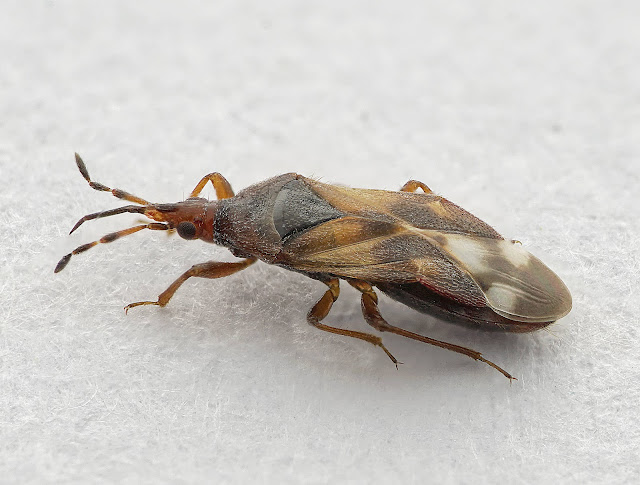
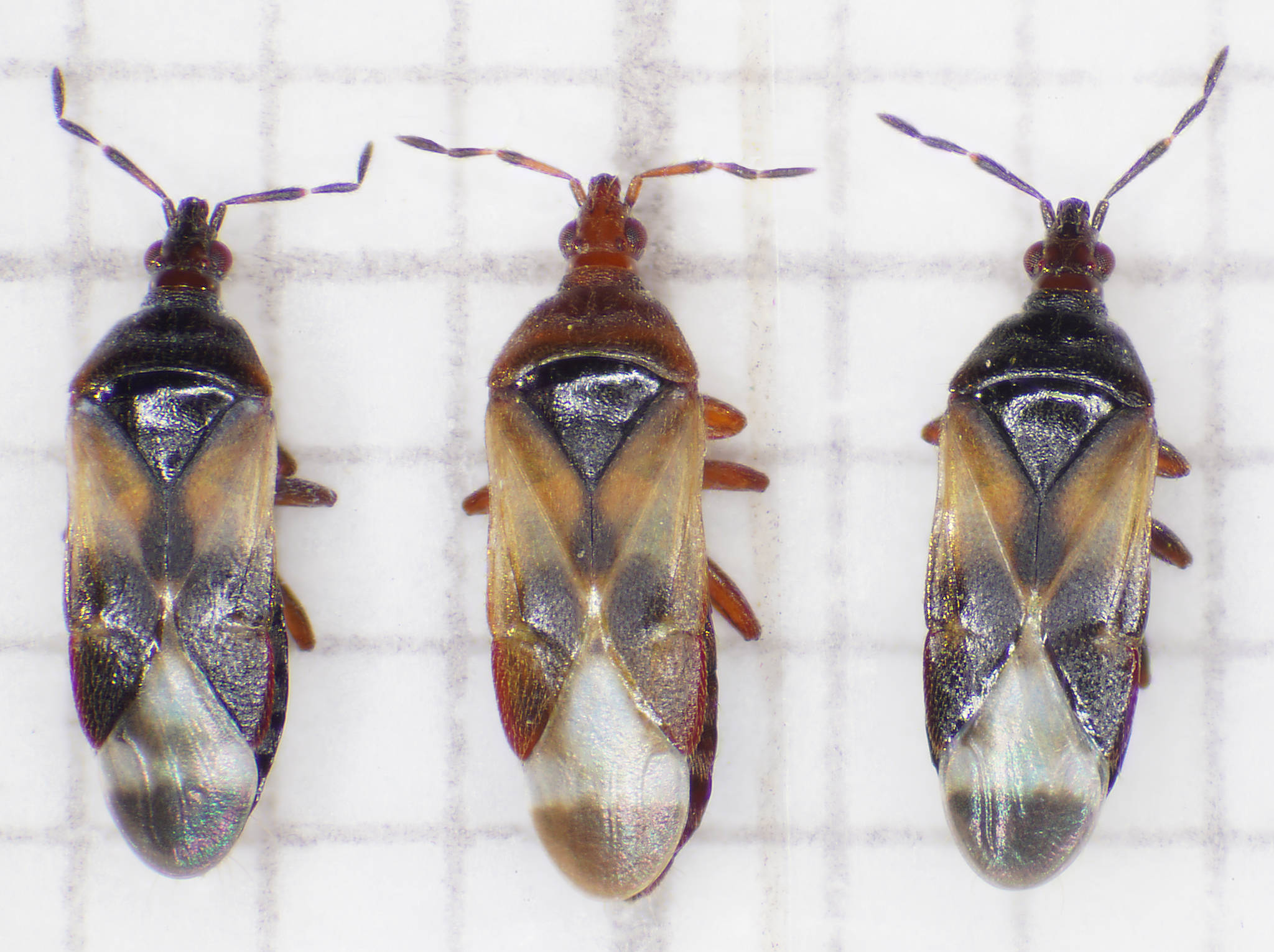
20.xii.2023  Beat Ivy in Attenborough Arboretum. My first records for Derephysia foliacea and Buchananiella continua

21xii.2023 Very windy.

22.xii.2023  Winter solstice. A wet one. Emailed out my entomological year in review/winter solstice review. It was still good to look back over what was not a massively memorable recording year but I feel guilty about committing a "round robin" crime. Most recipients seem to like it though. I'm still looking for the opportunity to commit to an entomological newsletter.

23.xii.2023  A short walk in Leicester Botanic Garden. Found a nearly skeletonised Muntjac but didn't investigate for carrion beetles as it was very smelly.

24.xii.2023  Reportedly the warmest Christmas Eve for 20 years, yet bringing in greenery from the garden for Christmas decoration only yielded two species this year, an Erigone and Rhopalus subrufus. In the evening, a green Lacewing appeared on the ceiling. What remarkable insects these are, so delicate in appearance and yet so robust.

26.xii.2023  A rare sunny morning so a walk at Launde. The fields are saturated with standing water in places I have never seen it before, and I have never seen the wood so wet.

27.xii.2023  Another named storm (Gerrit). Another very wet day.

30.xii.2023  Identified a few bugs sent to me before Christmas.  First record of Leiobunum sp. A in VC55 - only a mile from my house. The arrival of this mysterious new species is a rather exciting end to the year: https://www.naturespot.org.uk/species/leiobunum-sp-A


Nabis ferus

The last bug of the year - Nabis ferus


Friday, 22 December 2023

Happy Entomological Christmas

 Winter solstice greetings, with a look back at my entomological 2023. 

DALL·E3/Bing Image Creator

For me 2023 hasn't been a vintage recording year for a number of reasons. After the extreme heat of summer 2022, a cold snap in December and a wet winter, the year got off to a slow start. By the end of January I was desperate enough to try beating Box (Buxus sempervirens), a plant I've never investigated before. Via Anthocoris butleri, this started off a journey through the genus Anthocoris which in some ways has been the highlight of the year, and certainly good for my skills. Writing now at the end of the year we only have one Anthocoris species still missing in VC55, the appropriately seasonal Anthocoris viscii. Mistletoe is now quite plentiful here, but inaccessible high in the trees so I'm hopeful that Santa will bring me that drone with a vacuum sampler attached. 

Spring seemed to drag on and at times I despaired about the general lack of insects. In April, things started to improve, but mostly because I'd done something to help - I bought myself a dip net. Armed with this I started touring VC55 ponds and water courses recording aquatic bugs. This was hugely enjoyable, and working on live aquatic bugs is so much more enjoyable than dead moth trap specimens covered in scales! The only issue I had was one encounter with an elderly dragon who berated me for stealing tadpoles! I narrowly managed to escape being beaten with her rolled up umbrella and she remained utterly sceptical of my excuses about aquatic Homoptera. (Note: net is thoroughly disinfected between each site.)

In May I decided to repeat the trick and bought my first ever sweep net. I'd always been resistant to sweep netting, partly to avoid looking like a Victorian butterfly collector, but I now see the error of my ways. In the field the sweep net was both a blessing and a curse. At the times when I didn't want a lengthy conversation, I could easily sidestep because the usual civilian opener was "Are you looking for Butterflies?" (as in - What else to people catch in nets?), to which I could simply reply "Yes". (I wasn't.) The downside was the aggressive reaction from the off-lead dog plague at all of our nature reserves and SSSIs. Dogs really don't like sweepnets. Neither do dog owners - "You're upsetting him". 

It wasn't until June that things really picked up and on the 30th of June I have a very clear memory of standing in one of the rides at Prior's Coppice that was absolutely alive with insects. What a relief after the famine of spring! Armed with my new net I collected spiders, but mostly focused on Hemiptera, and in particular Mirids. I was looking forward to Carry On Sweep Netting into the autumn and adding to my Auchenorrhyncha records but at this point things started to go awry. In July it started raining and this carried on into August. Good for dip netting, not for sweep nettting. Personal circumstances then got in the way and I wasn't able to do much recording for several months, not even running the moth trap in the garden (bloody builders!). In September I was dragged off on holiday and deliberately didn't do any recording as I was feeling stale and in need of a break. 

Come October things improved and entomological activity started up again. I gave two talks on Mastigusa macrophthalma and while I was spouting my ecological theories about this species I had a lightbulb moment. This resulted in my second most enjoyable field visit of the year (after the relief of Prior's Coppice) - a day spent (successfully) poking around the 800 year Oaks in Bradate Park (first Oak-associated VC55 record for M. macrophthalma in 55 years). 

In November Santa came early and brought me a new camera I could slip in my pocket for macro photos in the field. This revitalized my recording, even though there wasn't much about by this stage of the year and many sites were still too wet to visit. The unexpected cold snap at the end of November and into December put paid to my recording year, apart from a late flourish from the Ivy. Overall, it's been a pretty average year, but I have done some new things and those have been the highlights. 

I don't do new year resolutions but it is good to have some specific targets for the coming year. The main one is to continue with the new collection methods I used this year - dip net, sweep net - and to avoid going to the same sites at the same time of year and collecting samples in the same way. Hopefully the ponds won't dry up in summer so I can continue dip netting into the autumn. The other objective is to run the garden moth trap on a regular basis! In addition, I have a cunning plan based on a remark that Jim Flanagan made in an online talk ... but more of that next year. 

The best thing about 2023 overall has been all the people I have worked with - face to face and online. I hope to be more sociable next year! 


Thursday, 21 December 2023

Common insect species are suffering the biggest losses

A new research paper suggests that terrestrial insect decline is being driven by losses among locally more common species - the species with the most individuals (the highest abundance) are disproportionately decreasing in number no other species have increased to the high numbers previously seen.  Examples include the Common froghopoper, Philaenus spumarius. This counters the common narrative that biodiversity loss is mostly characterized by declines of rare species. Given the importance of abundant species in ecosystems, their general declines are likely to have broad repercussions for food webs and ecosystem functioning. The authors conclude that:

"Abundant species are often disproportionately important for ecosystem structure, functioning and services, as well as for the diversity and abundance of higher trophic levels, so their declines are likely to have already led to a broad-scale rewiring of ecosystems, and will continue to do so." 


Disproportionate declines of formerly abundant species underlie insect loss. Nature, 2023; DOI: 10.1038/s41586-023-06861-4 https://www.nature.com/articles/s41586-023-06861-4


Friday, 1 December 2023

Nymphomaniacs - you're doing it wrong

Are you a nymphomaniac? Do you go to ridiculous lengths to identify every bug nymph you find? A new research paper suggests you stop. 

Anthocoris nymph
Anthocoris nymph

Soil and leaf litter support a diverse arthropod mesofauna, but their diversity is difficult to study due to the high number of species and specimens, small body size, and limited taxonomic knowledge. Immature stages (larvae) are even harder to identify than adults, as their morphology is largely unknown. Therefore larvae are often ignored, even though they may form a substantial proportion of specimens collected. These authors used DNA barcoding to investigate whether the inclusion of larvae provides a more complete taxonomic, phylogenetic and functional diversity profile in leaf litter beetles. Larvae represented up to 38% of specimens per sample, but most of them belong to 2–3 common species. The authors conclude that immature stages may be omitted in ecological studies of arthropods where both adults and larvae co-occur in the same habitat. Caution is needed when larvae and adults do not inhabit the same environment or strongly differ in biology, or when rare species are omitted.

Can immature stages be ignored in studies of forest leaf litter arthropod diversity? A test using Oxford Nanopore DNA barcoding. Insect Conservation and Diversity. 21 November 2023 https://doi.org/10.1111/icad.12702


Wednesday, 15 November 2023

What *another* camera? Olympus TG-6 review


Olympus TG-6

Christmas came early this year when Santa brought me a new camera. Surprisingly, it is a *new* camera rather than a used one which is how I buy most of my photographic equipment. As I have gradually accumulated more entomological clobber which I carry with me on field visits, it simply hasn't been been possible to drag expensive mirrorless cameras plus the lenses plus the lighting equipment along as well. For years I have been using a small Sony compact camera for field photos (bought used for under £100), and this has worked well, though with some limitations. As it aged, it became creakier and less easy to use and eventually needed replacing (so long old friend, you've been a faithful servant). 

My new camera is an Olympus TG-6 - so why did I buy it? The Olympus "Tough" cameras have been around for years and been through many iterations. Reading the experiences of many people it's clear that the TG cameras are the industry standard for pocket-sized field macro photography, but why not just use my mobile phone? I have used my phone for macro recently as the Sony compact became less reliable, but it's often a frustrating business. Mobile phones are great for two things. One of these is selfies, which I don't do (except for fingertips with bugs on), the other is big things like buildings. They simply weren't designed for macro photography and are very hit and miss. 

Olympus recently brought out the TG-7 so this was an opportunity to dive in and grab a used TG-5 or TG-6, but I simply couldn't find one. This in itself is a recommendation - people hang on to these cameras. The upgrades to the TG-7 are minor and mostly relating to video which I don't use much, but discounts were available as retailers sold off TG-6 stock and I found one at a reduced price (and rather less than the TG-7 sells for). So what do I think of it? 

On unpacking the camera I immediately turned off all the impressive but massively battery-draining stuff like the GPS and the Wi-Fi. The TG-6 has a small battery but I've been impressed with the battery life. Having such a small battery means that the TG-6 is smaller and lighter than my mobile phone, so this is a genuine pocket camera. Overall, I have found exactly what I was looking for in this camera, but there are a couple of caveats. Although the TG-6 is half the cost of my mobile phone it's not what I would regard as "cheap" (note: I am decidedly tight-fisted). For the price, the image quality is slightly disappointing, but I am comparing it to my Sony mirrorless cameras and I need to be realistic about this. The TG-6 is a complex camera and if you just use it on the Auto setting you'd be wasting your money. To get the best images you need to use all the features such as exposure compensation, "microscope" (macro) mode, and the in-camera focus stacking and focus bracketing - which is impressive for such a small camera. It's not the simplest camera to use but it is "easy" once you've figured out how to use it. There is one definite weakness - the TG-6 is crap at landscapes - for this I use my mobile phone which I carry with me anyway for things like ... phone calls. There is no real telephoto capacity - but I'm not an ornithologist. If you are, I would recommend one of the long telephoto bridge cameras over the TG cameras as a field solution, but the price of telephoto lenses is that you can't put them in your pocket and this is a limitation we're stuck with until someone comes up with a pocket black hole as a better way of bending light than heavy and expensive glass. 

I bought two essential extras for the camera, the most important of which is a spare battery - so light that it doesn't add noticeably to size or weight. The second thing I bought is the Olympus TG Light Guide, which attaches to the lens as a macro diffuser for the LED on the front of the camera. This is an essential for macro work. Many people have complained that the Light Guide is overpriced for a flimsy bit of plastic and this is true, but it succeeds in opening up the macro capacity of the camera without adding any significant bulk. The design means that it's not the best macro diffuser but you can work around the harshness of the lighting at close range by dialling down the exposure compensation. Photography with a camera this size is always going to be about compromises. 


Overall, the TG-6 does exactly what I bought it for. If you'd like to see sample images from this camera please see my social media accounts. 


Saturday, 21 October 2023

The "truth" about the false widow


Steatoda nobilis

This paper looks at the origins and spread of Steatoda nobilis, some dodgy arachnology from the Revd. Octavius Pickard-Cambridge, and concludes that the reason for its rapid range expansion is ... unknown (but it's not climate change). 

Steatoda nobilis, a false widow on the rise: a synthesis of past and current distribution trends. (2019) NeoBiota, (42). https://doi.org/10.3897/neobiota.42.31582

Abstract: 

The Noble False Widow, Steatoda nobilis (Thorell, 1875) (Araneae, Theridiidae), is, due to its relatively large size and potential medical importance, one of the most notable invasive spider species worldwide. Probably originating from the Canary Islands and Madeira, the species is well established in Western Europe and large parts of the Mediterranean area and has spread recently into California and South America, while Central European populations were not known until 2011.

We report on long-time observations that reveal that at least two flourishing populations in Germany (Cologne) have been present for over five years, while in Ecuador one population has been observed between 2014 and 2018 and several other records were made in other parts of the country. Data obtained from the British Spider Recording Scheme demonstrate that the species moved significantly northwards since the report of the first populations in the very South of England, after several decades of relative stasis. The sudden northward expansion highly correlates with a massive rise in press coverage of the species.

In the Americas, S. nobilis is currently known from four countries (USA, Chile, Ecuador, Colombia), and available DNA barcoding data obtained for specimens from this area suggest that multiple introductions occurred within each country. Using ecological niche modeling, we identified suitable climate regions for the species and discuss possible reasons for its current spread. We propose that seaside cities and villages with a temperate oceanic or Mediterranean climate are especially favourable potential habitats for S. nobilis and will face the highest colonization pressure in the future, while tropical upland regions with temperate climates are also vulnerable to invasion by S. nobilis.


Friday, 6 October 2023

Bionic Spider Silk

High-strength and ultra-tough whole spider silk fibers spun from transgenic silkworms. Matter: 6, 10, P3661-3683, (2023). 

Summary: "To advance ecological civilization, developing sustainable, eco-friendly high-strength and ultra-tough alternatives to non-sustainable synthetic fibers, such as nylon, is crucial. This necessitates a deeply scientific understanding of the fundamental determinants of fiber strength and toughness, as well as overcoming engineering challenges for cost-effective, large-scale production of high-performance silk fibers. Inspired by the mechanical properties of polyamide fibers, including nylon and Kevlar, we employed CRISPR-Cas9-mediated gene editing to successfully synthesize whole polyamide spider silk fibers from transgenic silkworms. These fibers exhibited impressive tensile strength (1,299 MPa) and toughness (319 MJ/m3), surpassing Kevlar’s toughness 6-fold. Thus, they offer promising potential as sustainable alternatives to synthetic commercial fibers. Furthermore, our research provides valuable insights into the fundamental essence of fiber toughness and tensile strength, challenging the conventional notion that these properties are contradictory. These findings have significant implications for guiding the production of synthetic commercial fibers that simultaneously possess high strength and ultra-toughness."

https://doi.org/10.1016/j.matt.2023.08.013


Sunday, 6 August 2023

Hunting the Grail - one gall at a time

A new species of flower bug joins the VC55 list.

Anthocoris minki
Anthocoris ("flower seed") minki (after Wilhelm Mink, 1807–1883, German entomologist who collected the type specimen)

For the past year the VC55 Bug Team has been hunting down the gaps in our Anthocoris list. Apart from general under-recording, some of these are hard to understand apart from the difficulties of identifying the species in this genus. Back in January we ticked off Anthocoris butleri and put a few dots on the map, but then we ran out of Box, the host plant, and had to stop. 

Earlier in the year I had checked spiral petiole galls on Poplar trees without success but they have now matured and this week my colleague was able to make the first VC55 record for Anthocoris minki (shown above). This species is dependent on Pemphigus aphids such as Pemphigus spyrothecae and develops entirely within the aphid-caused galls. 

Pemphigus spyrothecae

By collecting tightly closed galls and opening them indoors, contamination with other Anthocoris species is avoided although of course the I.D. still needs to be checked carefully. That would be easier to do if we could find a male, but to date all the VC55 specimens found have been female. To date we have found Anthocoris minki at four different sites (not bad for a weeks work) - and now, we have just about run out of Poplar, which is not common in VC55 and as an ornamental planting, even more poorly recorded. To date, I have found: 

Site 1: 54 galls examined, 1 adult found (2% occupancy). 
Site 2: 100 galls examined, 1 adult, 1 nymph, 1 shed found (3% occupancy). 
Site 3:  90 galls examined, 4 adults, 2 nymphs found (6% occupancy). 
Overall: 4% occupancy. 

If you're concerned about some idiot collecting this number of galls, these are large trees and the number collected is far less than 1% of those present on any one tree. All the bugs have been found in separate galls. Whether this is because the females lay one egg per location or because more than one bug per gall inevitably results in early stage cannibalism I don't know. 


Anthocoris minki nymph

Strictly speaking I couldn't swear that the nymphs are Anthocoris minki without rearing (not easy to do as they live in closed galls - Schrödinger's nymphs - but since they are in closed galls, good enough). 

So what is the Anthocoris Holy Grail? Rob Ryan has documented finding a complete set of shed skins within a gall representing every instar of development. So far I have found one shed, and that's not easy with all the horrid aphid crap within the galls (I don't like aphids), but hey, 20% of the Grail for a week's work isn't a bad haul. 

shed skin
Shed skin found in a gall

A week in and I'm drowning in Anthocoris minki, but starting to wonder if males exist...

Anthocoris minki


Many thanks to Jim Flanagan and my colleagues for helpful discussions.

 Sources: 

Péricart J. (1972) Hémiptères Anthocoridae, Cimicidae et Microphysidae de l'Ouest paléarctique. Faune de l'Europe et du bassin méditerranéen, vol 7. Bulletin de la Société entomologique de France, 78(9), 337-338. https://www.persee.fr/docAsPDF/bsef_0037-928x_1973_num_78_9_29150_t1_0337_0000_2.pdf