Sunday, 10 March 2019

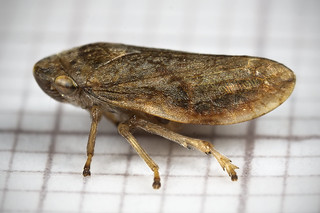
Eremocoris fenestratus

Eremocoris fenestratus


Because I've spent so much time sorting though leaf litter this winter I've had the opportunity to become familiar with the Lygaeidae (Groundbugs), having found them in pretty much every sample I've examined. I like their understatedness, but of them all Eremocoris fenestratus probably has the most interesting story. Historically known only from the Chilterns and associated with juniper, this species was thought to be extinct before reappearing in the London area in 2010. They are usually found under cypresses and are probably the result of horticultural introduction from the continent. I find mine under a large conifer in a churchyard. Known to have reached as far north as Northamptonshire, this is the first record for VC55, albeit only 5 miles north of southamptonsire, as I think of it.

Thursday, 7 March 2019

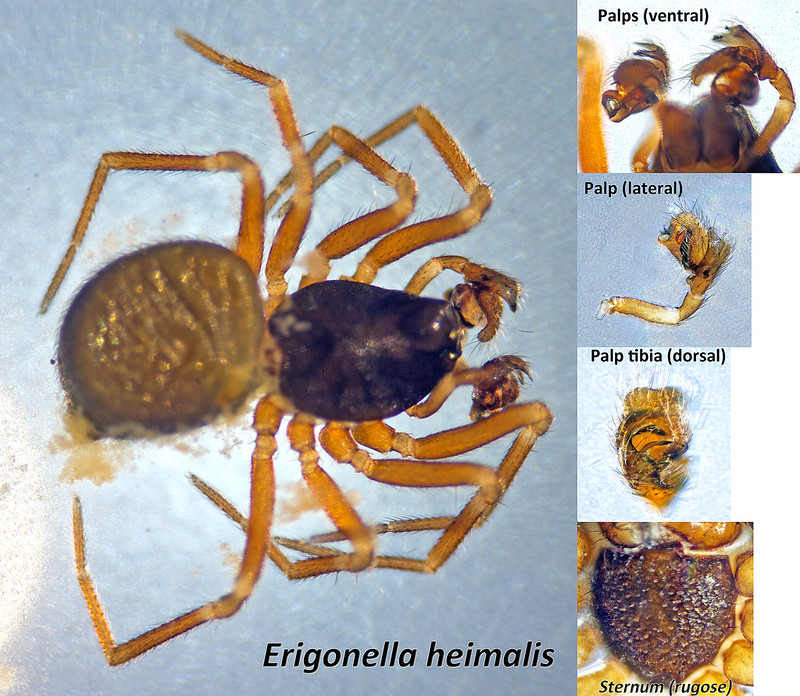
Erigonella hiemalis

Erigonella heimalis


I very much admire Australians - the fortitude they display when they know that spider in the bath can kill them - and what the Redback in the dunny is plotting, well that doesn't bear thinking about. In the UK things are different. Adult female Erigonella hiemalis can reach nearly 2 mm in length, although males like this one struggle to reach 1.5 mm. It's a dangerous life being a UK Arachnologist - think of the eye strain.

https://araneae.nmbe.ch/data/566

Friday, 1 March 2019

Common Quaker, Orthosia cerasi

Common Quaker


My first moth of the year. It's been hard work getting this one.

Saturday, 2 February 2019

Isopods and climate change

Climate is a key factor in isopod distribution and survival but it is not clear how predicted climate change will affect isopod distribution. There is evidence that mixed effects are to be expected, depending on the region under study. We still lack robust and extensive analyses of isopod distributions at different scales and in different biomes that might help evaluate future trends. Most scenarios predict increased drought in Mediterranean regions, which are assumed to become even more arid than today. Since the highest known species richness of isopods is found in this region, it is probable that a significant part of isopod diversity will be negatively affected. On the other hand, higher latitudes and altitudes may experience an increase in isopod diversity, if species will be able to expand their distribution ranges following increasing annual temperatures. An important process that has led to an increased isopod diversity in some regions of the world (e.g., North America, Britain) is human introduction of alien species. Isopods do not usually show pronounced interspecific competition, so introduction of alien isopod species is not expected to have major negative effects on native species, and that the net effect may be an increase in species richness. Nevertheless, there are some cases where introduced species may have led to exclusion of natives - such effects might be seen also in isolated tropical islands and human-made ‘tropical houses’ after the introduction of pantropical species, but also in temperate regions where several species have been introduced mainly of European origin. Climate change may also alter vegetation that can lead to changes in litter quality, which in turn may also influence detritivore species like isopods, but the processes involved are very complicated, so we cannot make safe predictions at the current state of knowledge.


Isopod distribution and climate change. Zookeys 03 December 2018. https://doi.org/10.3897/zookeys.801.23533


Thursday, 3 January 2019

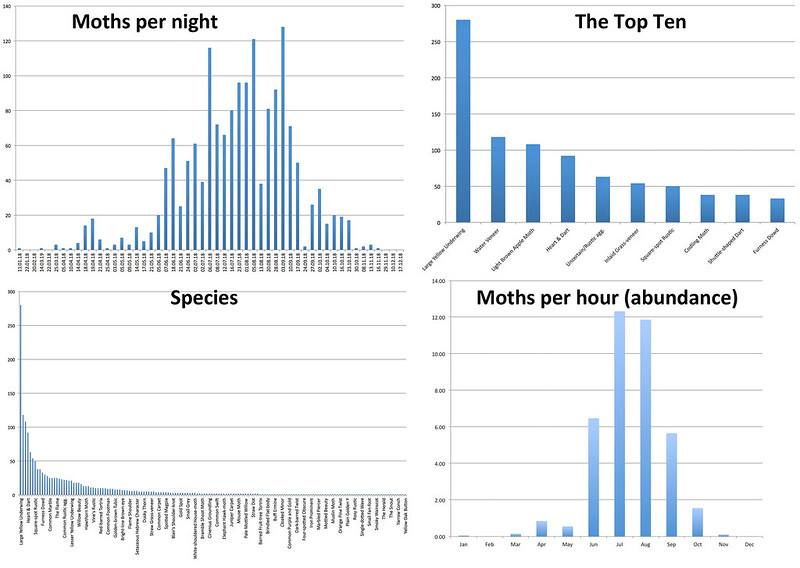
2018 - The Year in Moths

2018 - The Year in Moths

Click for larger image

1646 moths of 160 species, that's what my suburban garden managed in 2018. The year got off to a very slow start (remember all the snow?), nothing much at all until April. It really kicked off in June and the summer was notable for the number of migrants. I would have said Heart and Dart got the top slot, but the Large Yellow Underwings arrived late and then put in their normal dominant performance. Nearly all the Water Veneers arrived in three nights. The autumn was disappointing for me and I only trapped twice in December, not having seen a moth since the 16th November it just didn't justify the electricity.

It's temping to try a direct comparison with 2017 (923 moths of 108 species), but that's rather complicated. I changed my trapping equipment in May 2018 so direct comparisons are inevitably misleading, but for what it's worth:

2017 - The Year in Moths


Sunday, 16 December 2018

Caddis 2018

Once I'd made the decision that I was never going to be Dipterist, life got much easier. Not that there's anything wrong with Dipterists, in fact, some of my best friends are... We are very lucky in VC55 in having a very knowledgable and approachable expert in Ray Morris, who is always happy to receive caddis flies from moth traps, so I have outsourced my caddis I.D.s to Ray who has kindly provided the following list for my 2018 trapping efforts (30W Actinic + 15W Synergetic). Ray tells me that this haul is fairly average for a suburban garden, but as with moths, it can be surprising what turns up even in the middle of a town/city.


Ray Morris (2013) Provisional status of Trichoptera (caddis flies) in Leicestershire & Rutland (VC55). LESOPS 29 (February 2013)
ISSN 0957-1019. https://www.naturespot.org.uk/sites/default/files/downloads/LESOPS029_Caddis.pdf


Wednesday, 12 December 2018

Tool use in ants

Ants not only use tools but select the best tools for the task.

Humans use tools. Chimpanzees use tools. And it turns out ants use tools too, in a surprisingly sophisticated way:

When encountering liquid food sources, ants of the genus Aphaenogaster drop various materials as tools into the food, and then carry the food-soaked tools back to the nest. Although this is one of the well-documented examples of tool use in insects, we know little about which factors influence their choice of tools during foraging. Here, we investigated the tool-using behavior of Aphaenogaster subterranea by examining, across a range of settings, how tool-using workers deal with various foraging challenges. We used different types of tools and liquid baits with varying distances between the baits and the tools piled around them. Although ants showed the strongest preference for the most easily transportable tools, the frequency of usage of the less preferred larger tools increased when these were the first to be discovered or were more readily accessible to the ants. Additionally, tool selection occurred at 2 stages: when tools were picked up and dropped into baits, and later, when food-soaked tools were retrieved from baits. Our results confirm that tool use in A. subterranea exhibits a high degree of flexibility. Ants seem to be able not only to optimize their foraging effort by selecting tools that are best matched to the particular foraging environment, but also to learn how to improve the use of certain tools by modifying them. The adaptive value of flexibility in tool use may be the increased efficiency in the utilization of liquid food sources, which gains importance in the light of competition with co-occurring ant species.

Lőrinczi et al (2018) Which tools to use? Choice optimization in the tool-using ant, Aphaenogaster subterranea. Behavioral Ecology, 29(6), 1444-1452. https://doi.org/10.1093/beheco/ary110


Thursday, 6 December 2018

Woodlice in the city - landscape scale conservation in miniature

The latest issue of ZooKeys is a special edition: Isopods in a Changing World, containing papers from the 10th Symposium on the Biology of Terrestrial Isopods held in Budapest in 2017. The whole thing is well worth a look but three of the papers particularly captured my attention. Landscape scale conservation is a hot topic in ecology right now, however these papers look at the influence of small urban patches on isopod diversity and conservation.


Species compositions of terrestrial isopods in public parks of a commuter town in Japan https://doi.org/10.3897/zookeys.801.21875
This paper examines the isopods in 150 public parks in Munakata City in Japan. Eleven species of terrestrial isopods were present, of which seven were native or oriental species, and four exotic species originally distributed in the Mediterranean and European regions. The study showed that the urban public parks surrounded by forests or semi-natural environments provide habitats for native terrestrial isopods - native species tended to be located adjacent to natural environments adjacent to the parks, while their distributions had little relationship with the local environments within the park. The location of urban parks is an important factor to consider in their design to protect the largest number of species of native species - not something that usually gets much attention.


The role of urban forest patches in maintaining isopod diversity (Oniscidea) https://doi.org/10.3897/zookeys.801.22829
This paper assessed terrestrial isopod communities in degraded urban forest patches in a metropolitan area of Budapest, Hungary. The degree of urban disturbance was expressed using an urbanisation index based on built-up density and vegetation cover. Urbanisation indirectly affected the composition of isopod assemblages through the quantity of dead wood and soil plasticity. Urban forest patches harboured habitat generalist and established introduced species with relatively few rare endemic species. Areas with no or low anthropogenic disturbance had stable native species assemblages that were characteristic of rural sites in the same region. A bit of urban forest is definitely better than no forest, but not as valuable as an undisturbed environment.


Terrestrial isopods in urban environments: an overview https://doi.org/10.3897/zookeys.801.29580
In 2008 humans reached a major milestone: more than 50% of the global population now lives in cities (United Nation Population Division, World Urbanization Prospects 2011) - urbanization has become the major type of land use change in the 21st century. Terrestrial isopods are common members of the soil fauna in cities. They are well established in the built environment and in all types of urban green spaces including remnant habitat patches, parks, residential yards, vacant lots, and greenhouses. Urban isopod assemblages are a mixture of a few cosmopolitan species that thrive in human dominated landscapes, a subset of the native fauna, and more recently introduced species. This paper reviews studies of urban isopods, looks at current knowledge gaps and future research needs, and calls for a better global dataset, long term monitoring of urban populations.

Tuesday, 4 December 2018

The Evolution of True Bugs

Philaenus spumarius
The Order Hemiptera - True Bugs - contain a major proportion of insect diversity - over 120,000 described species including shieldbugs, plant bugs, bed bugs, pondskaters, cicadas, water bugs, aphids and scale insects. A recent scientific paper takes a shot at a DNA taxonomy for this diverse group. The researchers examined the DNA sequences of 2,395 genes from 193 groups. Unless you're into DNA taxonomy, the details of the paper are hard going, but the conclusions are fascinating. In summary:
  • The bugs split from the Paleoptera (dragonflies, damselflies, and mayflies) and Neoptera (all other insects) 437 million years ago, before the Carboniferous period. This great age helps to explain the diversity and species richness of this group.
  • Thrips (Thysanoptera) are the closest living relatives of true bugs and allies (Hemiptera).
  • The results agree with evidence from the fossil record that the earliest hemipteroids fed on detritus, pollen, fungi, or spores (as do most modern bark lice and thrips). Plant-fluid feeding probably coincided with the origin of Hemiptera and evolved independently in thrips.


Phylogenomics and the evolution of hemipteroid insects PNAS USA, 21 Nov 2018) https://doi.org/10.1073/pnas.1815820115