Monday, 13 March 2023

The Kleidocerys Conundrum


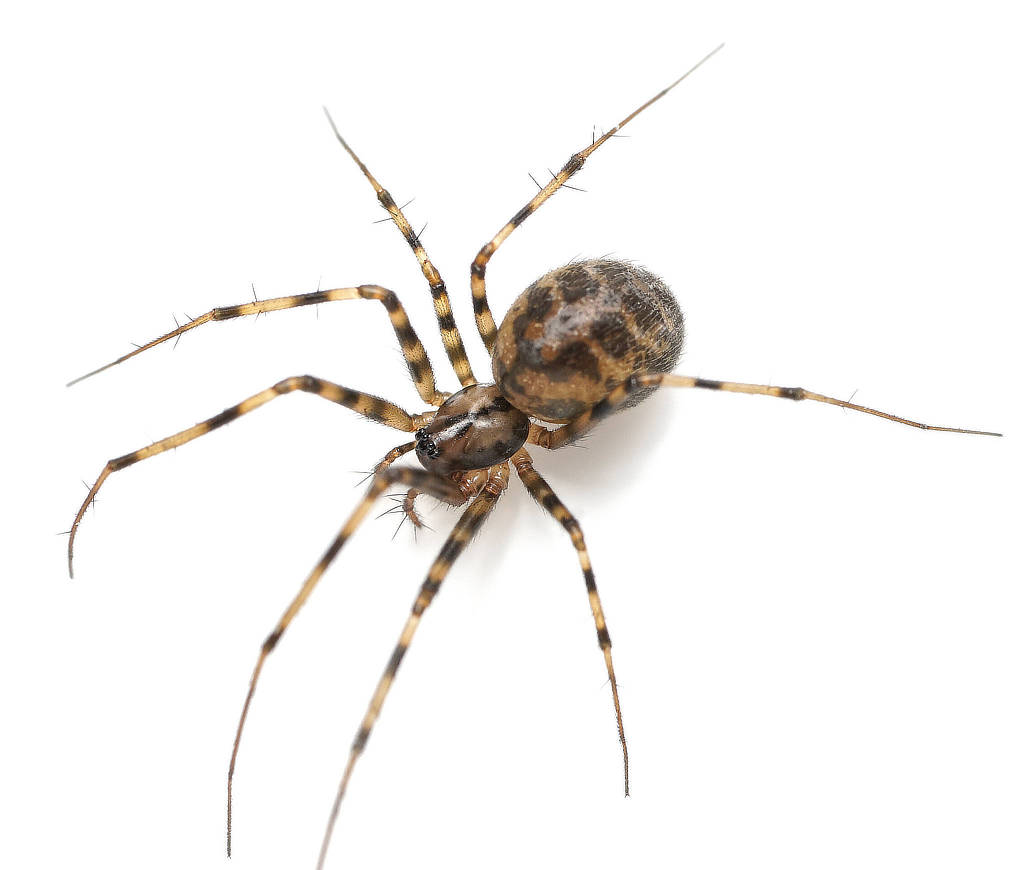
Kleidocerys resedae?

There are two UK species of Kleidocerys, K. resedae, the Birch Catkin Bug, and K. ericae (see update below). They are very similar and difficult to separate.  The Birch Catkin Bug is very common, 4.5-5.5 mm long and with a mostly brown scutellum, although this is variable. (Kleidocerys privignus is similar but somewhat darker than K. resedae and occurs on Alders, but is now generally considered to be an ecoform of K. resedae (Carayon, 1989).)  K. ericae is generally slightly smaller than K. resedae at 3.5-4.8 mm and is associated with heathers, both Erica and Calluna.  K. ericae is mainly distinguished from the Birch Catkin Bug by its smaller average size, by its lighter ground color on average and by its host plants. 

All good so far?  Well not really.  The two species overlap in terms of size and pigmentation, and K. ericae is also capable of completing its normal development on Birch catkins (Woodroffe, 1960; Carayon, 1989).  So are they in fact the same species?  No, apparently not.  Like many Hemiptera, Kleidocerys communicates by stridulation.  In this genus, sound production seems not to be associated with mating but occurs when they are disturbed, perhaps as a territorial statement.  K. ericae stridulates at a frequency of 16 Hz while K. resedae uses a lower frequency of 8 Hz (Haskell, 1957).  

This is where it gets difficult (you thought it was difficult already?).  We are used to thinking of "sound" at much higher frequencies than this.  The range of "normal human" hearing is generally quoted as about 20 Hz to 20 KHz.  Above 20 KHz is ultrasound - we whip out our bat detectors to took for Soprano Pipistrelles (Pipistrellus pygmaeus) at 55 KHz, or strain to hear the top end of expensive hifi setups (alas, no longer possible at my age).  Below 20 Hz is infrasound - put away your bat detectors and your mobile phones, they don't work in this range.  What you need down here is laser Doppler vibrometry, and there isn't a mobile phone app or a pocket detector for that.  Fun though adventures in the vibrosphere are (Rexhepi et al, 2021), the only reliable way to tell Kleidocerys species apart is to whip out your laser Doppler vibrometer and listen - or to be more strictly accurate, watch, as we are now using light rather than sound to detect vibrations.  The good news is that you can pick them up used on eBay for less than £1,000, but they are the size and weight of a suitcase (carry on size, hold luggage weight). 

Kleidocerys then, remains frustratingly ubiquitous but annoyingly out of reach.  Until, of course, DNA studies are performed to clarify the situation.  We already know the mitochondrial DNA sequence of K. resedae - remarkably, the shortest mitochondrial genome of any Hempiteran (Li et al, 2016) - but I am not aware of any comparative studies with K. ericae.  I think I need to add a pocket DNA sequencer to my shopping list. 


UPDATE: Make that three species of Kleidocerys: The Kleidocerys Conundrum - Resolved?


References

Carayon, J. (1989) Systématique et biologie des Kleidocerys d'Europe [Hem. Lygaeidae]. Bulletin de la Société entomologique de France, 94(5), 149-164. 

Haskell, P.T. (1957) Stridulation and its analysis in certain Geocorisae (Hemiptera Heteroptera). Proceedings of the Zoological Society of London, 129 (3): 351-358. 

Li, T., Yi, W., Zhang, H., Xie, Q., & Bu, W. (2016) Complete mitochondrial genome of the birch catkin bug Kleidocerys resedae resedae, as the first representative from the family Lygaeidae (Hemiptera: Heteroptera: Lygaeoidea). Mitochondrial DNA Part A, 27(1), 618-619. 

Rexhepi, B, et al. (2021) Hay meadow vibroscape and interactions within insect vibrational community. Iscience, 24(9), 103070. 

Woodroffe, G.E. (1960) Entomologist's Monthly Magazine, 96: 156. 


Tuesday, 28 February 2023

More than you (probably) ever wanted to know about Lygus

Namyatova et al (2022) reviewed five Palearctic Lygus species: L. gemellatusL. pratensisL. punctatusL. rugulipennis,L. wagneri. This document considers four species on the UK Checklist: L. pratensisL. punctatusL. rugulipennisL. wagneri; the fifth UK species, L. maritimus, was not examined by Namyatova et al but is covered by Nau (2004). Namyatova et al conclude that:

  1. The currently recognized Lygus species are poorly supported by DNA studies or are non-monophyletic, thus needing reclassification (L. gemellatusL. pratensis and L. wagneri appear to be synonymous, as do L. punctatusand L. rugulipennis).

  2. However, morphometric analysis is generally a reliable way of separating the currently recognized species. 

  3. Until a taxonomic revision of this genus is published, the existing species must stand and can be separated (with some difficulty) based on morphology. 

The morphological characters used by Namyatova et al are: 
  • punctation on clavus and corium

  • vesical spicule shape

  • presence or absence of teeth on the right side of the small lobe of the vesica

  • colour pattern

Due to the difficulty of examining the vesica, only punctation on clavus and corium and colour patterns are used in this document. (N.B. All Lygus species have antennae light/light+dark; c.f. Orthops, all dark). In general, the species descriptions given by Namyatova et al (2022) agree with those in Nau (2004). 

Lygus pratensis 

Males 5.1-7.0mm, females 5.1-6.6mm. Scutellum usually with single brown mark or stripe or the medial anterior part. Hemelytra with short, dense setae, often appearing shiny. Punctures on middle part of hemelytra evenly spaced, distance between them equal or less than puncture diameter; anterior half of clavus with some punctures at a distance longer than puncture diameter; punctures on posterior half of clavus evenly spaced and close to each other, but distinctly separate from each other. 

Lygus punctatus

Males 5.9-7.2mm, females 5.1-6.7mm. Scutellum either with two stripes or W-shaped mark on the medial anterior part. Hemelytra with short, dense setae, often appearing shiny. Punctures on middle part of hemelytra and on anterior and posterior half of clavus further apart than the puncture diameter. 

Lygus rugulipennis 

Males 4.9-5.9mm, females 4.5-6.4mm. Scutellum either with two stripes or W-shaped mark on the medial anterior part. Hemelytra covered with dense flat setae, its surface appearing dull and matte. Punctures on hemelytra and clavus very small and almost touching each other;

Lygus wagneri

Males 5.7–6.8, females 5.3-6.5mm. Scutellum either with two stripes or W-shaped mark on the medial anterior part. Hemelytra with sparse setae, often appearing shiny. Punctures on middle part of hemelytra evenly spaced, distance between them equal or less than puncture diameter; punctures on anterior half of clavus spaced further apart than the puncture diameter; punctures on posterior half of clavus evenly spaced and close to each other, but distinctly separate.

Lygus maritimus (from Nau, 2004) 

Punctures on apical region of the corium several diameters apart in each direction. 


References: 

Namyatova, A. A., Tyts, V. D., & Bolshakova, D. S. (2022) Identification and delimitation of the trans-Palearctic Lygus species (Insecta: Heteroptera: Miridae) using integrative approach. Insect Systematics & Evolution, 1, 1-47.https://doi.org/10.1163/1876312X-bja10035

and:

Nau, B. (2004) The Lygus situation. Newsletter of the UK Heteroptera Recording Schemes 3, 11.https://www.britishbugs.org.uk/HetNews/Issue%203_Spring%202004_422Kb.pdf


Sunday, 12 February 2023

Veterinary flea products in widespread pesticide contamination of English rivers

  • The environmental impact of pesticides used in veterinary flea treatments is largely unknown. This is an analysis of potential sources of fiprole and imidacloprid pollution in 20 English rivers. 
  • Seven out of 20 sites exceeded the chronic toxicity limit for Imidacloprid. 
  • Sewage worksare indicated as a possible route to rivers for fiproles and imidacloprid. 
  • Veterinary flea products are a potential source of pollution and ecosystem harm and a reevaluation of the environmental risks is needed. 

Perkins, R., Whitehead, M., Civil, W., & Goulson, D. (2021) Potential role of veterinary flea products in widespread pesticide contamination of English rivers. Science of The Total Environment, 755, 143560. https://doi.org/10.1016/j.scitotenv.2020.143560 

Little is known about the environmental fate or impact of pesticides used to control companion animal parasites. Using data from the Environment Agency, we examined the occurrence of fipronil, fipronil metabolites and imidacloprid in 20 English rivers from 2016 to 2018, as indicators of the potential contamination of waterways from their use as ectoparasiticides on pets. Water samples were collected by the Environment Agency as part of their chemical surveillance programme and analysed using Liquid Chromatography Mass Spectrometry / Quadrupole-Time-of-Flight Mass spectrometry (LC/Q-TOF-MS) methods. A total of 3861 chemical analyses were examined, and the significance and potential sources of this contamination were assessed. Fipronil, fipronil sulfone, fipronil sulfide (collectively known as fiproles) and imidacloprid were detected in 98.6%, 96.5%, 68.7% and 65.9% of samples, respectively. Across the river sites sampled, the mean concentrations of fipronil (17 ng/l, range <0.3–980 ng/l), and fipronil sulfone (6.5 ng/l, range <0.2–39 ng/l) were 5.3 and 38.1 times their chronic toxicity limits of 3.2 and 0.17 ng/l, respectively. Imidacloprid had a mean concentration of 31.7 ng/l (range <1–360 ng/l), which was below its chronic toxicity limit of 35 ng/l, however seven out of 20 sites exceeded that limit. Chronic risk quotients indicate a high environmental risk to aquatic ecosystems from fiproles, and a moderate risk from imidacloprid. Sites immediately downstream of wastewater treatment works had the highest levels of fipronil and imidacloprid, supporting the hypothesis that potentially significant quantities of pesticides from veterinary flea products may be entering waterways via household drains. These findings suggest the need for a reevaluation of the environmental risks associated with the use of companion animal parasiticide products, and the risk assessments that these products undergo prior to regulatory approval.


Friday, 10 February 2023

The spiderpocalypse is upon us

Arthropod decline at the local (field) scale is largely influenced by changes at the landscape scale. 

"There is widespread evidence for a worldwide trend of insect decline, but we have much fewer data about recent temporal trends in other arthropod groups, including spiders. Spiders can be hypothesised to similarly decline because of trophic dependence on insects and being equally sensitive to local and global environmental changes. Background trends in arthropod populations can be verified if we decouple large-scale environmental transitions, such as climate change, from local factors. To provide a case study on baseline spider community trends, we observed changes in the spider community of an unsprayed alfalfa field and its margin 23 years apart under largely unchanged local conditions. We aimed to determine whether there are changes in spider abundance, species richness and mean species characteristics. Spider abundance per unit effort decreased dramatically, by 45% in alfalfa and by 59% in the margin, but species richness and most characteristics remained unchanged. Community composition in both habitats shifted and became more similar by the current study period. The population decline was especially marked in certain farmland species. We propose that in the absence of local causative factors, spider abundance decline in our study indicates a reduction of spider populations at landscape and regional scales."

Samu, F., Szita, É., Botos, E. et al. Agricultural spider decline: long-term trends under constant management conditions. Sci Rep 13, 2305 (2023) https://doi.org/10.1038/s41598-023-29003-2 

This is why nature reserves don't work: Cooke, R., Mancini, F., Boyd, R. J., Evans, K. L., Shaw, A., Webb, T. J., & Isaac, N. J. (2023). Protected areas support more species than unprotected areas in Great Britain, but lose them equally rapidly. Biological Conservation, 278, 109884: https://doi.org/10.1016/j.biocon.2022.109884


Saturday, 4 February 2023

Not the bee's knees

You may have seen the wildlife documentary "My Garden of a Thousand Bees", wildlife cameraman Martin Dohrn's 2020 Covid lockdown project.  If you haven't seen it, Google it and try and track it down - it's the best wildlife documentary I've seen for years, certainly since before the BBC gave up on anything that is not characteristic megafauna. And if that doesn't give you enough food for thought, read this:


MacInnis G, Normandin E, Ziter CD. 2023. Decline in wild bee species richness associated with honey bee (Apis mellifera L.) abundance in an urban ecosystem. PeerJ 11:e14699 https://doi.org/10.7717/peerj.14699


Thursday, 5 January 2023

Lygus - bad news for bug-bothers

The genus Lygus isn't getting any easier. 

Lygus pratensis

My very first record for 2023 is this Mirid bug sifted from Oak leaf litter. There are five species of Lygus on the UK checklist, L. maritimus, L. pratensis, L. punctatus, L. rugulipennis and L. wagneri. A typical Lygus ("smooth") pratensis ("of the meadows", so "Smooth Meadowbug") is easy to spot - shinier in overall appearance than the other members of the genus and with a single stripe on the scutellum (if present). Ah, there we have it - "if present". For Lygus is a notoriously variable genus, and quite frankly, often a pain to identify. This specimen appears to be an easy one, a nailed-on pratensis (but for the record, I did check the pubescence on the cuneus). But am I being over confident - is there more to Lygus than meets the eye? The degree of variability in this genus is worrying - does it signify hidden genetic diversity which conflicts with the current taxonomy? Are there a bunch of cryptospecies lurking in the leaf litter?

It's not just me that worries about this. A 2020 paper describes conflicts between DNA barcoding and species identification, although this partly arises from historic mis-identification of specimens rather than true taxonomic problems (Piemontese et al, 2020). In addition, a more recent paper (Namyatova et al, 2022) also suggests that DNA analysis does not agree with morphologically delimited Lygus species. 

The cynical old bug-botherer (or cynical old bugger, if you prefer) in me is happy to blame the taxonomists for this mess. As a dyed in the wool lumper I'm happy to blame the splitters for these problems. But that doesn't solve the problem - identifying Lygus species reliably is not going to get any easier. It's an "interesting" way to start the new year. But things can only get better - can't they? 


References:

Namyatova, A. A., Tyts, V. D., & Bolshakova, D. S. (2022) Identification and delimitation of the trans-Palearctic Lygus species (Insecta: Heteroptera: Miridae) using integrative approach. Insect Systematics & Evolution, 1(aop), 1-47. https://doi.org/10.1163/1876312X-bja10035
Abstract: Lygus (Insecta: Heteroptera: Miridae) is a Holarctic genus, and some of its representatives are important pests. Determining the Lygus species identity and their interrelationships is challenging. Our study aimed to delimit five trans-Palearctic species of this group: L. gemellatus, L. pratensis, L. punctatus, L. rugulipennis and L. wagneri. We implemented analyses of morphological characters, morphometrics, cytochrome c oxidase subunit I (COI) and 16S rRNA sequences. The results showed that those species could be delimited using morphology and most species pairs were different in morphometrics. Both COI and 16S rRNA were useful for species identification. Resulting phylogenetic trees contained two highly supported clades. One clade included species known from the Palearctic only, the other clade contained species with Nearctic and Holarctic distribution. Species were mostly poorly supported or non-monophyletic. Molecular species delineation approaches yielded results that generally did not correspond to the morphologically delimited species.

Piemontese, L., Giovannini, I., Guidetti, R., Pellegri, G., Dioli, P., Maistrello, L., & Cesari, M. (2020) The species identification problem in mirids (Hemiptera: Heteroptera) highlighted by DNA barcoding and species delimitation studies. The European Zoological Journal, 87(1), 310-324. https://doi.org/10.1080/24750263.2020.1773948


Thursday, 29 December 2022

2022 - My Year in Spiders

 I would sum up 2022 as quality over quantity...

2022 Spiders

I haven't been able to spend as much time as I would have liked on spidering this year, but I'm still pretty pleased with the outcome. The weather has been challenging with alternating exceptional droughts, rainfall and the highest temperature ever recorded here. Although the number of specimens I recorded was well down, I managed to make some nice finds. Here are my highlights.


Megalepthyphantes sp. near collinus

Megalepthyphantes nr collinus

The year started well in January when I was refurbishing an old garden pond into a bog garden and found a specimen of Megalepthyphantes sp. near collinus which I eventually managed to identify with help, a horticultural import I suspect and the first record for VC55.


Leptorhoptrum robustum

Leptorhoptrum robustum
This Linyphiid turned up on a streamside survey in March as part of a local river restoration project, one of two projects to which I have devoted field time this year. An inhabitant of the local sewage works, these spiders work their way downstream and I have found them at several places along the watercourse, showing just how much restoration is needed.


Mastigusa macrophthalma

Mastigusa macrophthalma
I "refound" the "Charnwood Spider" in VC55 after a gap of twenty years as part the other large landscape project I have been contributing to this year. The first specimens turned up in March at one of the species strongholds, but I was subsequently able to find it at another site where it had never been recorded. More importantly, I was able to confirm that it was not present (following on from decades of arachnological work) at quite a few other sites which look eminently suitable but where it is just absent. I only recently worked out why this is, so I think this quest will be continuing next year.


Textrix denticulata

Textrix denticulata
This attractive spider was a by-product of searching for Mastigusa. This species is not common in VC55, or at least it is not commonly recorded, but I found it at a number of different locations, partial compensation for drawing a blank with Mastigusa on most field trips.


Mangora acalypha

Mangora acalypha

This orb-weaver has only spread to VC55 very recently and the few records have been from a garden so it was a pleasant surprise to find it on Gorse in a rural location. This one is clearly on the move. 


Arctosa leopardus

Arctosa leopardus
I found this attractive wolf spider in a riverside sample in May when I was desperately targeting damp places after the spring drought. Much of my time this year has been taken up slogging though hundreds of pitfall trap samples from a large 2021 survey at Rutland Water which turned up several specimens of this species - the first records for VC55. My specimen came from the opposite side of the vice-county, so it is clearly established on different drainages and it is strange that this species has not been recorded before.


Collinsia distincta


Collinsia distincta

This Linyphiid came from the same riverside sample as Arctosa leopardus, making this a productive trip. The first record for VC55 for this species.


Lophomma punctatum

Lophomma punctatum

As if two weren't enough, the same sample also produced a specimen of Lophomma punctatum. This spider is well known from the County but not often recorded so it was a nice addition.


Oonops domesticus

Oonops domesticus

Last and very definitely least (size-wise!), Oonops domesticus paid me its triennial visit in October. I only seem to see this spider in my house every three years or so but it is always a welcome sight - one of my favourites. 


Monday, 28 March 2022

Old Big-Eyes is Back

 Quiz time! Which species of spider is this the natural habitat of? 

Habitat

One of them is Textrix denticulata, not particularly common in Leicestershire:

Textrix denticulata
In January I was asked by the Charnwood Forest Landscape Partnership scheme if I could help refind the "Charnwood Spider", Mastigusa macrophthalma. This species was last recorded in Leicestershire 20 years ago, and on Charnwood 21 years ago. Rashly, I said yes, but bearing in mind some good arachnologists have been surveying on Charnwood in recent years, privately I had my doubts. For various reasons, I haven't been able to do much fieldwork yet this year, but recently I was able to revisit one of the last known Charwood sites for the species.

Mastigusa macrophthalma

Mastigusa macrophthalma

Mastigusa macrophthalma


Success :-)

The other interesting thing about this record is that the spider was associating with Formica lemani (thanks to Gavin Gamble and Matt Hamer for the ID) under the rock, which I have not seen listed as a known associate for this species elsewhere:

Formica lemani

I'm delighted to have been able to see and photograph this magnificant spider (now back under its home rock after a few photographs). However, I do worry a lot about the amount of disturbance and pressure on the site. My next move, having got my eye in, is to try and find new sites for the species, clinging to its ancient Charnwood home by its teeny tiny claws.